

Drawing on eight years working in Angola, Dimexon Rough Diamond Manager Siddharth Javeri discusses the experiences that shaped his approach to traceability, risk and sourcing – and how cross-functional collaboration at Dimexon is helping to deliver greater value for clients.
Can you introduce yourself and tell us how your career in diamonds began?
“I grew up in Belgium before moving to London, where I completed undergraduate and postgraduate degrees in Investment and Financial Risk Management. This led me to a career in finance which provided a strong professional framework that I was later able to apply to the diamond industry. Through a series of chance encounters and unexpected opportunities, I found myself living and working in Angola, where I helped to establish a diamond-sourcing operation. That experience laid the foundations for the career I have today. I am now responsible for non-contractual rough sourcing at Dimexon.”
How did your eight years in Angola shape your understanding of the diamond industry?
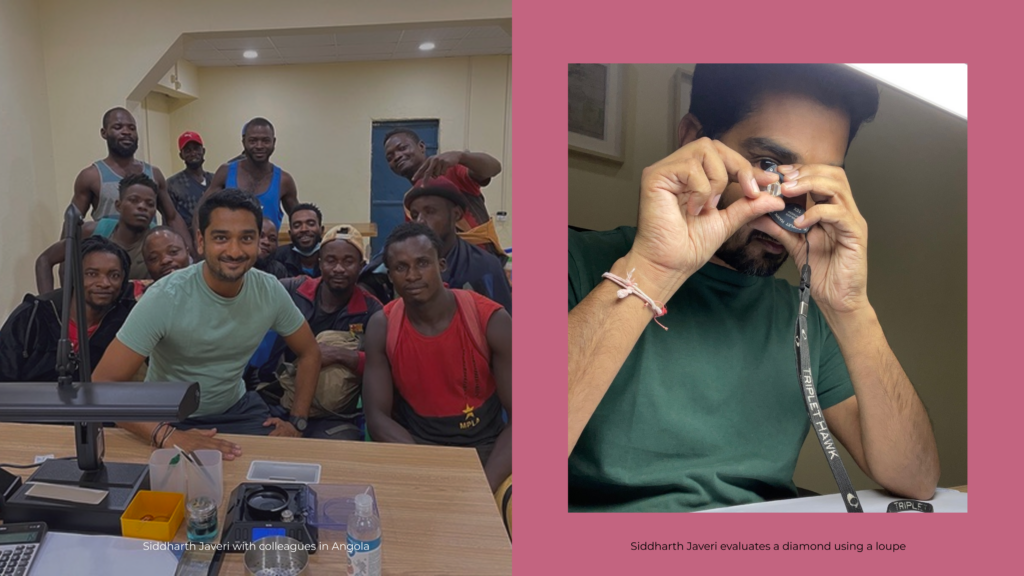
“It was a period of significant personal and professional growth. I deepened my product knowledge, but I also learned how to operate in an extremely dynamic environment in which market conditions, risks and priorities can change quickly. Working at source gave me a much broader understanding of the issues shaping our industry, from traceability and System of Warranties requirements to compliance, market dynamics and risk management. Adapting to change and mitigating risk became almost second nature.”
What did working at the source teach you about the wider diamond value chain?
“At the source, you see the full picture: the mining operations, political environment, compliance realities and communities connected to the industry. Some of this context can become less visible by the time a parcel reaches a trading or manufacturing centre. That experience made me particularly conscious of the importance of provenance and pipeline integrity. These principles are central to Dimexon’s approach to sourcing, and we work proactively to identify and mitigate potential risks throughout our value chain.”
How do you view Angola’s place within today’s rough diamond market?
“Angola is an important part of the global rough diamond supply mix, despite its mining sector historically receiving less investment than some of its peers. Its production has the potential to increase, while the fragmented nature of the sector can create interesting sourcing opportunities. My experience there also helps me assess the country’s role within a much wider picture, taking into account not only availability and market dynamics, but also compliance, traceability and counterparty risk.”
What does your current role at Dimexon involve?
“My role is to identify the right rough diamonds, at the right value, outside Dimexon’s structured contractual supply channels. This requires close relationships with suppliers, a detailed understanding of our product requirements and careful assessment of which tenders are best aligned with our needs. Although my core responsibility is rough sourcing, the role extends beyond purchasing. As part of Dimexon’s vision to be future perfect, I am also involved in initiatives across different departments that aim to streamline our operations, strengthen traceability and ultimately deliver greater value to our clients.”
How does cross-functional collaboration support this work?
“One example is my involvement in Dimexon’s Advanced Planning and Scheduling system. The project connects the journey from rough sourcing through manufacturing to the polished diamonds delivered to our clients. Working across this process has given me a deeper understanding of each stage of our operations and how individual decisions affect the wider organisation. More recently, we completed our first direct shipment of rough diamonds from Dubai direct to our manufacturing facility in Coimbatore – usually the diamonds would first travel to our Mumbai offices before being sent south to Coimbatore. This required close collaboration between internal teams and external stakeholders, helping us to create a more streamlined route into manufacturing. These initiatives also create opportunities to connect operational improvements with our traceability KPIs, strengthening the information and assurance we can provide to clients.”
In your opinion, what are the most significant sourcing risks facing the industry?
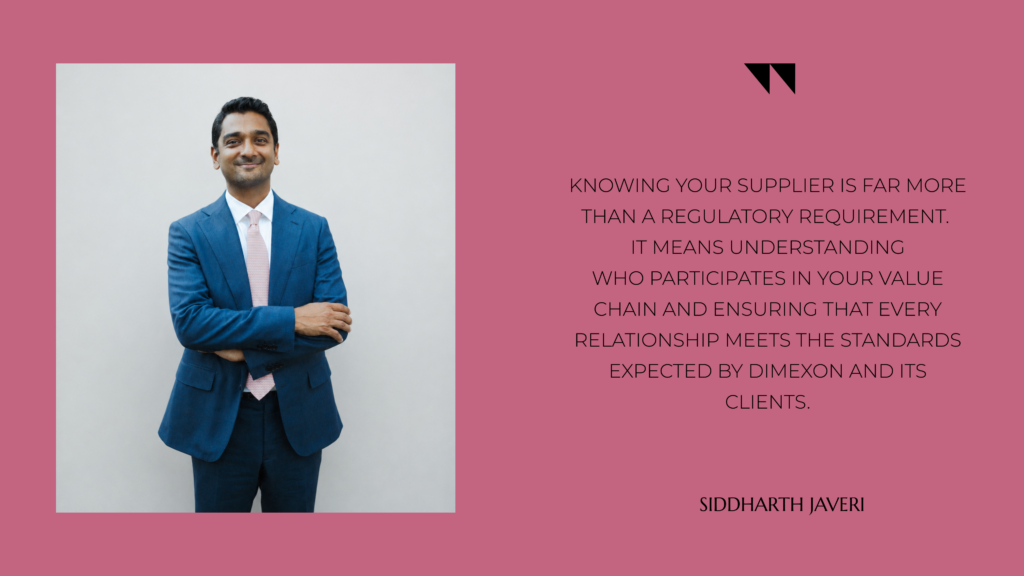
“Knowing your supplier is far more than a regulatory requirement. It means understanding who participates in your value chain and ensuring that every relationship meets the standards expected by Dimexon and its clients. Our clients need confidence in where and how their diamonds have been sourced. Counterparty checks, compliance processes and traceability are therefore essential. Reputational risk is especially important because a single failure can undermine trust built over many years.”
What has stood out to you about Dimexon’s people and culture?
“Although I have only been with Dimexon for just over a year, I have been struck by the depth of knowledge and experience around me. I work alongside seasoned industry professionals whose expertise is invaluable as we navigate a fluctuating market. There is also a clear willingness to challenge established ways of working. Senior leadership has created an environment in which people are given the space and tools to think differently, while remaining focused on clear business and client outcomes. That combination of experience, collaboration and fresh thinking gives us a strong foundation from which to address the challenges ahead.”
